When I first started thinking about spatial design, I found myself asking a simple question.
What actually makes something a spatial moment?
At first it might sound like it is just about new media formats. Spatial photos. Spatial video. Immersive environments.
But after spending time designing and experiencing these things in Apple Vision Pro, I have come to see spatial moments as something slightly different.
A spatial moment is not just a type of media.
It is an experience.
To me, a spatial moment is a moment where spatial computing and design come together to create a sense of presence.
It is the feeling that you are not just looking at something.
You are there with it.
Three types of spatial moments
Spatial moments can appear in several different forms. In my own work exploring spatial design, I tend to think of them in three categories.
Captured spatial moments
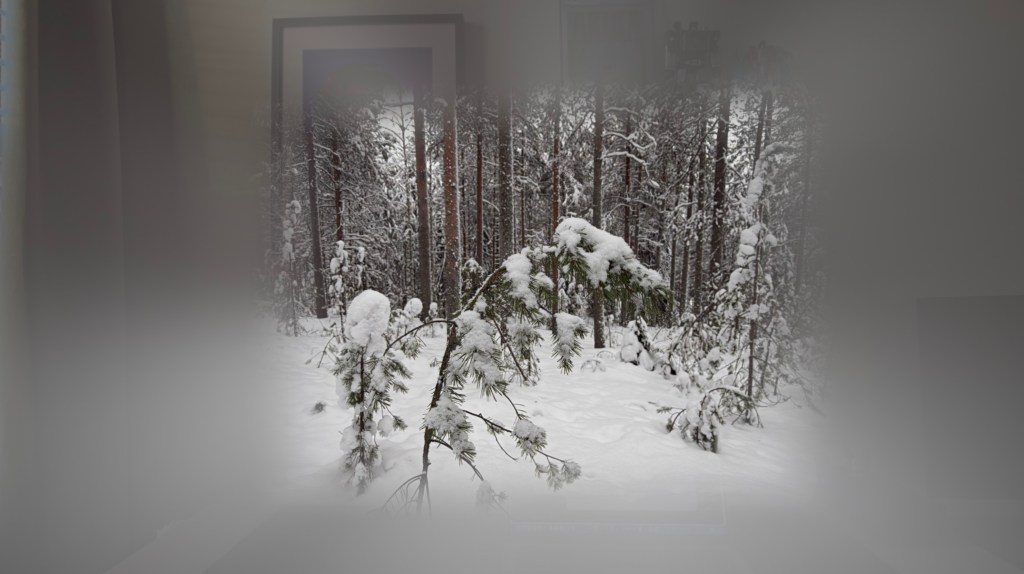
These are moments recorded using spatial media such as spatial photos or spatial video.
Traditional media captures moments in flat formats. A photograph captures an image. A video captures motion.
Spatial media adds something else.
Depth. Perspective. Presence.
When viewing spatial photos or spatial video in Vision Pro, you begin to notice that difference immediately.
Recently I was reviewing some spatial photos captured during a family walk.
At first glance they look like normal images. But as you move your head slightly, the scene shifts. Layers of depth appear. The space between objects becomes visible.
For a brief moment it feels less like looking at a photograph and more like revisiting the moment itself.
That feeling, however subtle, is what I would describe as a spatial moment.
Augmented spatial moments
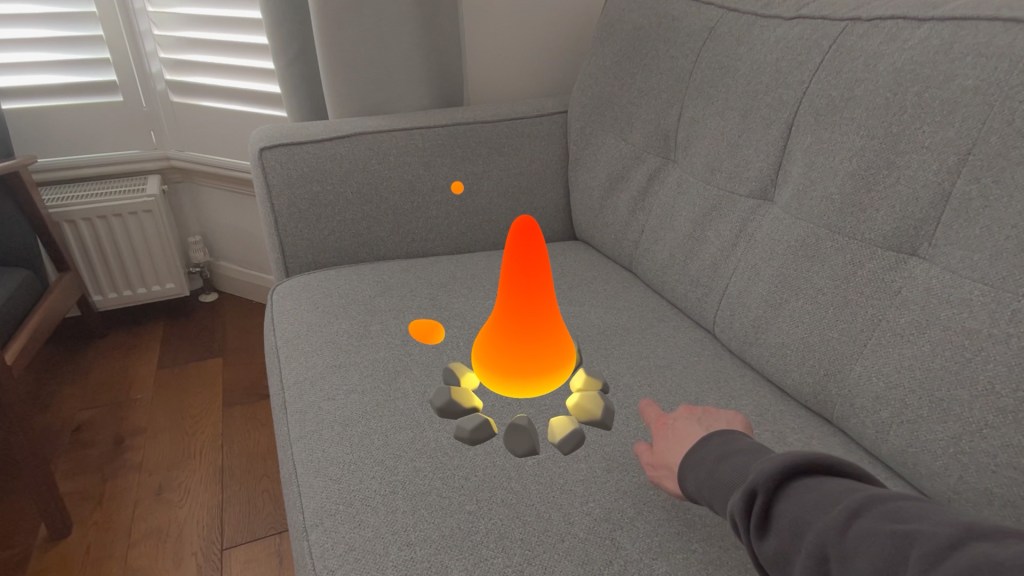
Spatial moments can also be created when digital objects blend into the physical world.
While developing Campfire Space, I started thinking about how spatial design itself can create these kinds of moments.
One example is the fire volume inside the app.
It is a simple idea. A small animated 3D campfire that can be placed into your environment.
You can scale it to any size and position it anywhere in your space.
Because it is a volumetric object, the fire exists as a presence within the room. The flame animates subtly and spatial audio gently radiates from the position of the fire.
You might place it on your desk while working.
At some point something interesting happens.
You almost forget that it is not a real object.
Your brain begins to accept it as part of the environment.
Then maybe you reach out to interact with something nearby and suddenly you remember that it is digital. You need to use a gesture to interact with it.
That brief moment, when the digital and physical begin to blur, is another kind of spatial moment.
Designed spatial moments
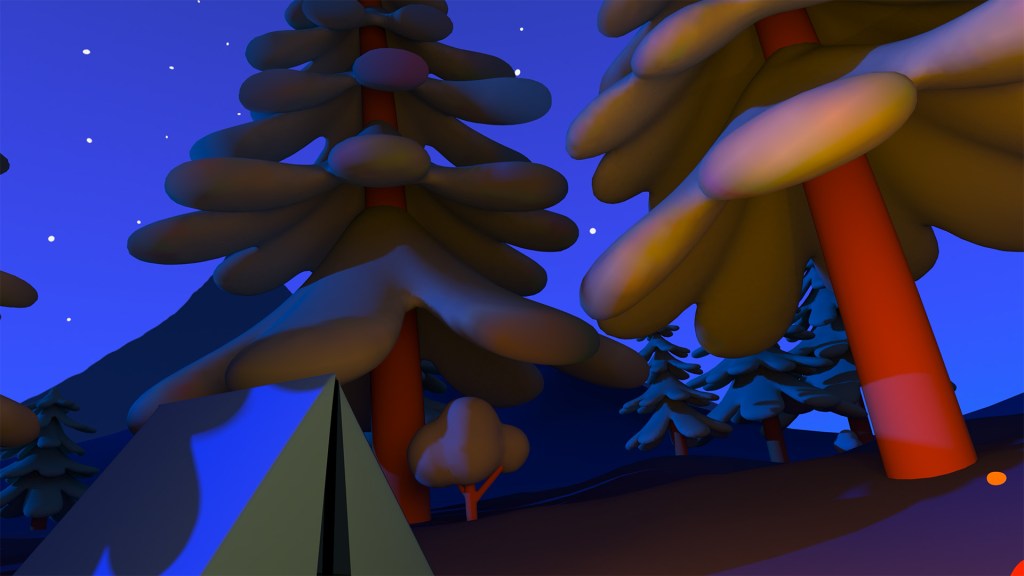
Designing immersive environments introduces an even deeper layer of spatial experience.
When building the immersive environment for Campfire Space, the design process felt very different from traditional screen based design.
It was not about designing a single view.
Instead it was about designing a place.
What does the user feel when they first enter the environment?
Where do their eyes naturally travel?
What happens when they look behind them?
Elements like lighting, sound, colour and distance suddenly become core design materials.
Spatial moments often occur when space itself becomes part of the experience.
The distance between objects, the direction of sound, or the scale of an environment all contribute to the feeling of presence.
Spatial audio becomes particularly important. A subtle sound placed in the right location can help anchor the entire experience.
Animation, scale and movement all play a role as well.
All of these ingredients contribute to creating spatial moments within the environment.
Why spatial moments matter
Spatial computing introduces a new way of experiencing memory, storytelling and design.
For captured memories, spatial photos and video allow us to revisit moments with a stronger sense of presence.
For designers, spatial environments and volumetric objects allow us to craft experiences that simply were not possible before.
These technologies are still early.
But over time these interactions may become normal.
People may regularly place digital objects into their surroundings.
They may revisit memories through spatial photos or immersive video.
They may step into designed environments for work, relaxation or storytelling.
In all of these cases what we are really experiencing are spatial moments.
If you’re curious about how spatial media might change the way we remember experiences, you might also enjoy reading Is Spatial Media the Future of Memories?
